联系我们
HKUST(GZ)
我的门户
  • EN
  • ZH
  • ZH
  • 关于系统枢纽
    • 枢纽领导
    • 愿景与使命
    • 事实数据
    • 我们的团队
  • 学域
    • 生命科学与生物医学工程
    • 智能交通
    • 机器人与自主系统
    • 智能制造
  • 教育项目
    • 研究型硕博教育
    • 本科生教育
  • 研究与知识转移
    • 研究项目特色
    • 知识转移特色
  • 新闻与媒体
    • 活动
    • 新闻稿
    • 视频
    • 社交媒体
  • 加入我们
    • 联系我们
    • 招聘
活动 - 系统枢纽

新闻与媒体

> 新闻与媒体 > 活动
  • 活动
  • 新闻稿
  • 视频
  • 社交媒体
  • SMMG Seminar | Machine Learning for Manufacturing: From Prediction to Understanding and Decision-Making
    29 10 月 2026

    Engineering and manufacturing require decisions based on data that are often scarce, noisy, and collected from different experiments and simulations. How can machine learning help engineers use this evidence to predict system behaviour, understand underlying mechanisms, and make better decisions?

    智能制造
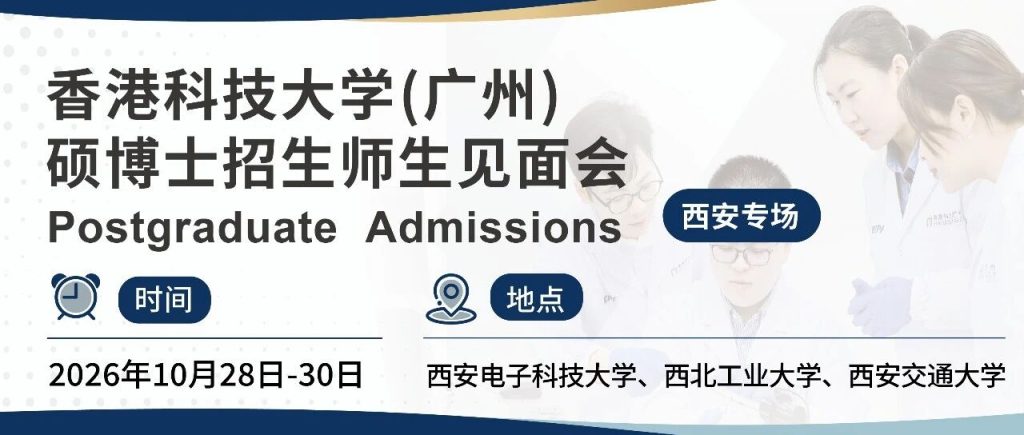
  • Postgraduate Admission | Upcoming: 10月28-30日硕博士招生师生见面会(西安专场)
    24 10 月 2026
    系统枢纽
  • ROAS Seminar丨Dr. Yiming LI
    16 10 月 2026

    Building robots that can act reliably across changing environments and tasks requires more than mapping observations directly to actions. Robots must represent useful structure in their bodies, tasks, environments, and prior experience. My research asks what structure should be represented or learned in advance, and how it can be reused to generate action efficiently online. In this talk, I will present a progression from robot geometry to task structure and learned behavior. I will discuss implicit and configuration-space distance fields for collision, contact, planning, and control; Riemannian geometry and learned geodesic distance fields for task-dependent motion generation; and geometric representations of demonstrations that support reactive imitation and visuomotor control. Across these works, a common principle is to represent reusable structure offline and construct behavior online through efficient queries, optimization, and composition. I will conclude with directions toward structured, physically grounded embodied intelligence.

    机器人与自主系统
  • BSBE Forum丨Prof. Kazuhiro Maeshima from the National Institute of Genetics (NIG), Japan
    15 10 月 2026

    The human genome is folded into chromatin loops by the cohesin complex, forming functional chromatin domains that underlie transcription and DNA replication/repair. However, how cohesin organizes these domains in living cells and the biological relevance of this organization, especially for transcriptional regulation, remain elusive. To address these questions, we combined single-nucleosome imaging/tracking using Repli-Histo labeling [1], super-resolution imaging (3D-SIM [2] and STORM [3]), and euchromatin-specific labeling of histone H3.3 [4]. Using this nanoscopic approach, we revealed that euchromatin forms condensed domains that are constrained by cohesin-mediated loops [5]. These condensed domains exhibit characteristic diameters on the order of a few hundred nanometers (with peak diameters of ~200–240 nm in STORM-based clustering analysis). This organization refines the classical textbook view of euchromatin as largely open, in line with emerging evidence [6, 7]. Transcriptional machinery appears to be located near the condensed domain surfaces/borders [5]. Cohesin loss increased nucleosome fluidity within these domains without altering their overall compaction, leading to local “mixing” of domains and compromising transcriptional insulation [5]. These findings uncover an unexpected physical role of cohesin in maintaining the integrity of condensed euchromatic domains and ensuring proper higher-order regulation of gene expression in the cell.

    生命科学与生物医学工程
  • INTR Seminar | Dr. Xiangdong CHEN, The University of Hong Kong
    12 10 月 2026

    Connected and automated vehicle technologies are creating new opportunities for future transportation systems. While these technologies improve vehicle-level intelligence, their system-level benefits depend strongly on how individual vehicles are coordinated.

    智能交通
  • BSBE Guest Seminar丨Dr. Weichuan Yu from The Hong Kong University of Science and Technology
    10 10 月 2026

    Post-translational modification (PTM) plays a critical role in disease biology, yet identifying peptides with multiple PTMs remains computationally challenging. In this talk, we present our effort in tackling this computational challenging by using different methods, including coding method, simulation study, greedy method, and a combinatorial optimization method.

    生命科学与生物医学工程
  • BSBE Forum丨Prof. Qiuliyang YU from Shenzhen Institute of Advanced Technology, Chinese Academy of Sciences
    28 9 月 2026

    Aging is accompanied by dynamic remodeling of cellular metabolism, but many key metabolic transitions remain difficult to measure with spatial and temporal precision. NAD+ biology provides a powerful entry point because it connects mitochondrial function, DNA repair, inflammation, stress response, and cellular repair.

    生命科学与生物医学工程
  • SC²I x IEEE ComSoC x IEEE SPS GZ Chapter Joint Distinguished Lecture | Prof. Dong Li from MUST
    15 9 月 2026

    The rapid advancement of generative artificial intelligence (GenAI) has introduced novel opportunities for semantic communication (SemCom) systems. This talk offers a comprehensive overview of GenAI-enabled SemCom, connecting theoretical foundations with practical applications. Initially, we introduce the fundamental concepts of SemCom and explore how generative models augment traditional communication paradigms. The talk systematically reviews state-of-the-art methodologies, including variational autoencoders, generative adversarial networks, diffusion models, and other GenAI frameworks within SemCom contexts. We classify GenAI in SemCom based on its GenAI architecture, communication modality, and application tasks. Finally, we identify emerging research directions and discuss open challenges that merit further investigation.

    智能交通
  • BSBE Seminar丨Dr. Xiaoxu Li, School of Life Sciences, Swiss Federal Institute of Technology Lausanne (EPFL)
    08 9 月 2026

    Despite major advances in our understanding and treatment of metabolic dysfunction–associated steatotic liver disease (MASLD), its global prevalence remains high, affecting approximately 30–38% of the population. Thus, there is an urgent need to develop new therapeutic strategies and further elucidate the mechanisms underlying MASLD development. In this seminar, I will first introduce a composite clinical trait, the metabolic health score, developed to predict the risk of MASLD and related metabolic disorders, offering a potential tool for early disease assessment and risk stratification. I will then describe how genetic and dietary factors shape the gut microbiota–liver bile acid axis and, in turn, influence hepatic metabolism, providing new insights into potential therapeutic targets for MASLD. Finally, I will present our preclinical and clinical studies of a liver X receptor (LXR) inverse agonist and discuss its therapeutic effects and mechanisms in MASLD. Together, these studies cover different aspects of MASLD, from risk prediction and underlying mechanisms to potential therapeutic approaches, with potential implications for its clinical use.

    生命科学与生物医学工程
  • BSBE Seminar丨Dr. Wenqi Hu, Biology and Biological Engineering Department, California Institute of Technology
    04 9 月 2026

    Life begins with a single cell. Within days, it gives rise to distinct tissues that organize into an embryo and the supporting structures essential for implantation and further growth. Understanding how this highly coordinated process unfolds remains a fundamental question in biology.

    生命科学与生物医学工程

文章分页

1 2 3 4 5 … 25
搜索
筛选
关注系统枢纽
  • 关于系统枢纽
  • 学域
  • 教育项目
  • 研究与知识转移
  • 新闻与媒体
  • 加入我们
© 版权属香港科技大学(广州)所有 粤ICP备20065231号